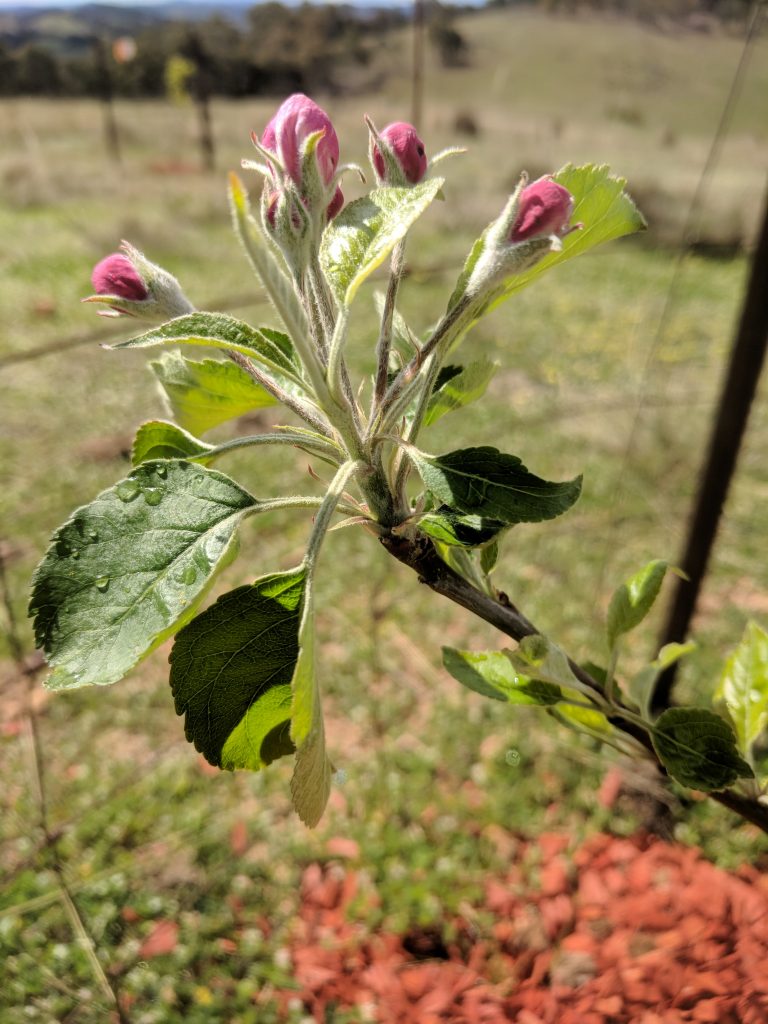
One of the ideals of Little Green Hill is to increase the supply of a wide range of food in order to increase our well-being, from a nutrition and overall health standpoint, and to also improve our self-sustainability as a whole. With that thought in mind, and with the thought of utilising cuttings to further grow more fruit tree’s around the property in the future, we decided that we would start establishing an orchard on the property this year.
After considering the placement options on the property, and considering the planning ideals for the property as indicated in my previous post, we have decided to place the orchard on the north side of the property approximately 30 meters from where we believe the house will be built. The location is a north facing slope which will make the most of the sun during our southern hemisphere winters. The placement also coincides with a large portion of the government designated “Vulnerable Regulated Land” which is categorised due to it’s steepness and susceptibility to erosion, with which the orchard will improve as the vegetation should slow the flow of water across the hill. Due to the differing natures of the trees involved, I’ve decided to place them around 7 paces apart and in a zig-zag pattern down the hill to catch as much rainfall as possible.
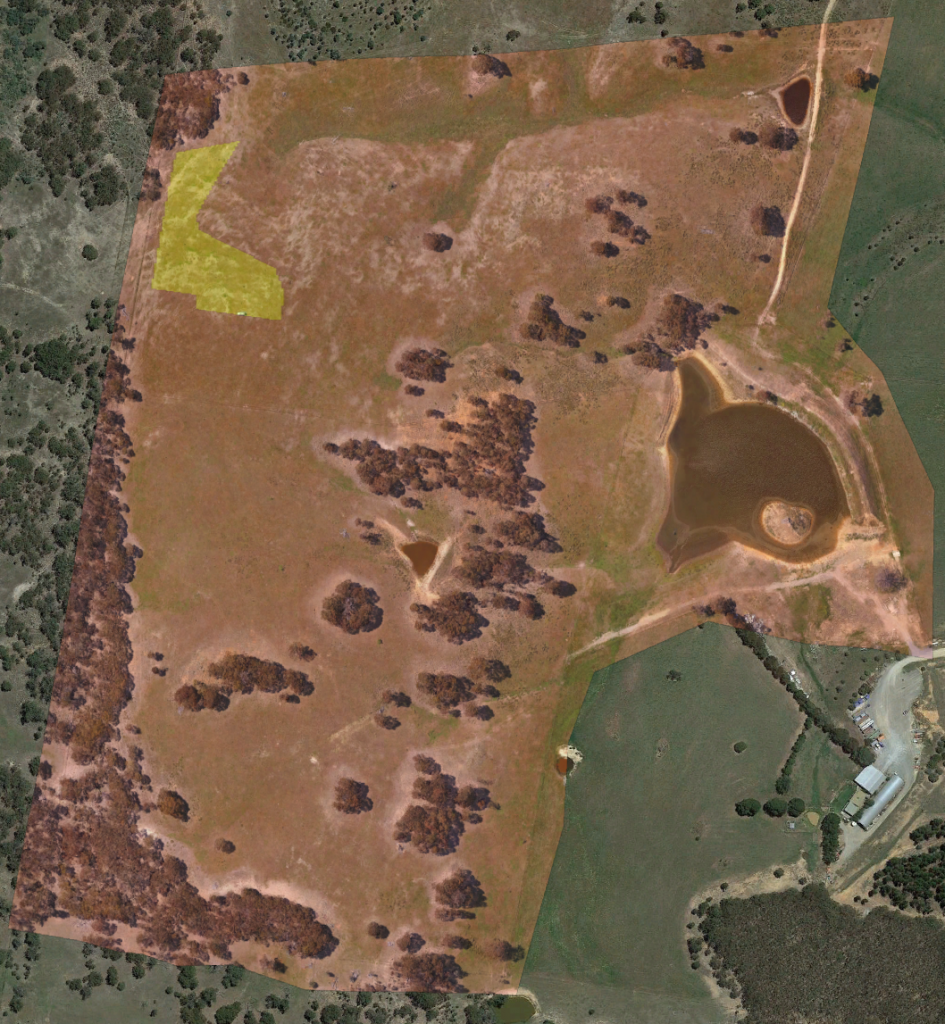
The designated house orchard area.
The downside of the placement of the orchard in that location is that wind could be a significant issue, particularly for tree varieties that are susceptible to wind or wind chill. We do plan to put in a wind break of trees on the western side of the property which should negate some of the prevailing winter winds. I suspect that this should not only assist with lessening the prevailing winds during the winter months for our home, but will also no doubt lessen our orchard wind troubles in the future.
Another issue that we’ve faced in growing trees on the property is the significant impact it has faced from kangaroos. The north-western corner of the property backs a bush-land and up to 100 roos at a time can be seen crossing through the property regularly. To protect the juvenile trees, cages have been constructed for each tree which, no doubt well protect the tree, have been time consuming to create for each tree. Thankfully, our farm design incorporated the removal of a lengthy fence that previously separated the property which has been reused as cage material.
The final issue that we are currently facing is water. At this time we are carting water in 25 litre containers and buckets up the hill from the main dam and can water all trees with two or three trips, depending on need. We have plans to build up a watering cart in the coming weeks which should alleviate some of these issues, but for now we are sitting here and hoping for rain each week to lessen the task.
All trees have had their holes dug by hand and measure about 60cm in diameter and equally as deep. Each tree has been planted with a 50:50 mixture of the hole soil dug out mixed with around 20 litres of bagged compost and then covered with mulch. Digging each hole by hand is quite a workout, but I’d prefer to be spending my workout time there than in a gym any day.
At this time, we have planted approximately 15 trees within with an additional 13 ready to go in. The majority of the planted trees were shipped bare rooted during the dormant winter months from online suppliers, whilst the outstanding trees are mostly citrus and still need holes and cages to suit. Several of the citrus are labelled as just outside our winter climate zone, however I have plans to handle these utilising the protection cages and clear plastic to build mini-greenhouses for each one – more on that next year, but I have similar thoughts for managing some other trees on our property in the future, such as an avocado or two..
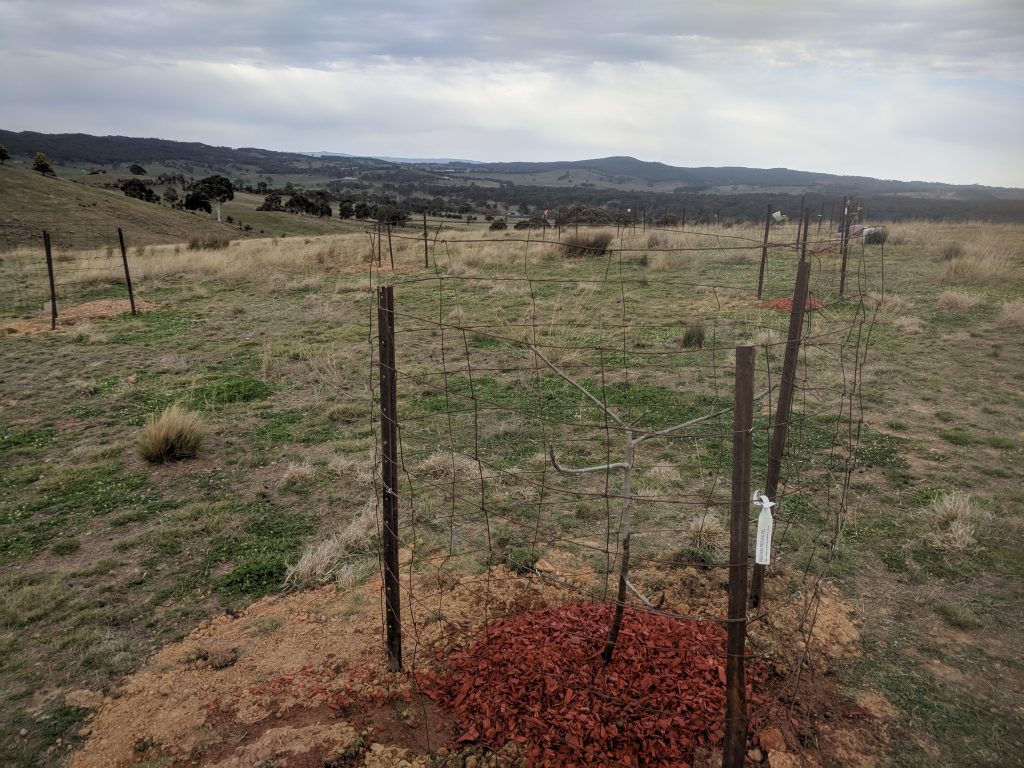
Our list of planted orchard trees consists of:
- Apple – Red Fuji
- Apple – Redlove
- Apple – Granny Smith
- Apple – Pink Lady
- Peach – Angel x 2
- Fig – Preston Prolific
- Pomegranate – Wonderful
- Pomegranate – Kazake
- Pear – Beurre Bosc
- Pear – Nashi
- Apricot – Fireball
- Nectarine – Sunset
- Quince – Champion
- Quince – Smyrna
- Chestnut x 2
Whilst the outstanding trees are:
- Lemon – Eureka x2
- Finger Lime – Alstonville
- Lemon – Lemonade
- Orange – Cara Cara
- Lime – Rangpur
- Tangelo – Seminole
- Lime – Tahitian
- Mandarin – Imperial
- Grapefruit – Star Ruby
- Orange – Seville
- Cherry – Stella x2
So there you have it – we are definitely looking forward to seeing how all of these trees grow in our climate and we will hopefully be enjoying the fruits of our labor for years to come!
Best Wishes,
James