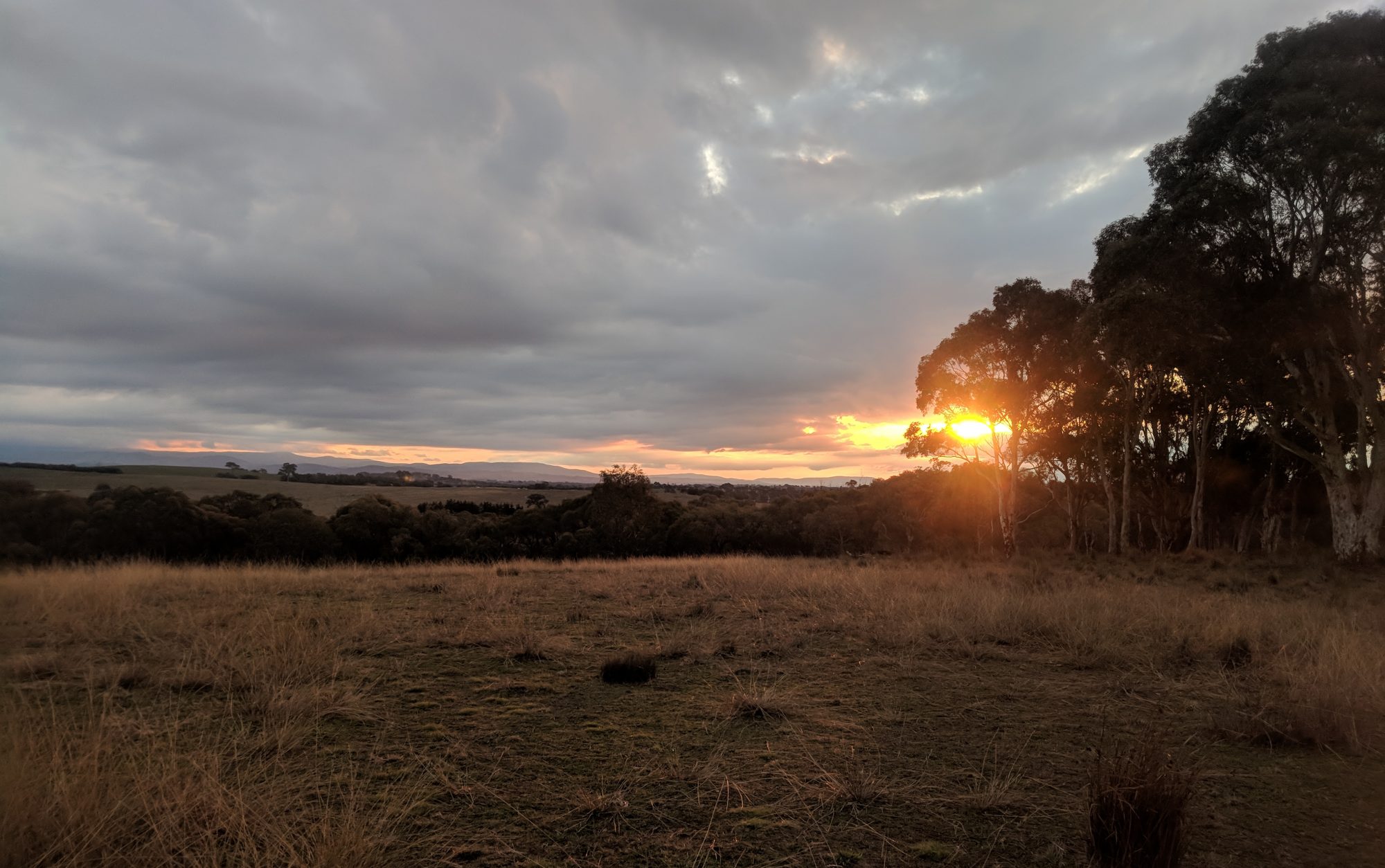
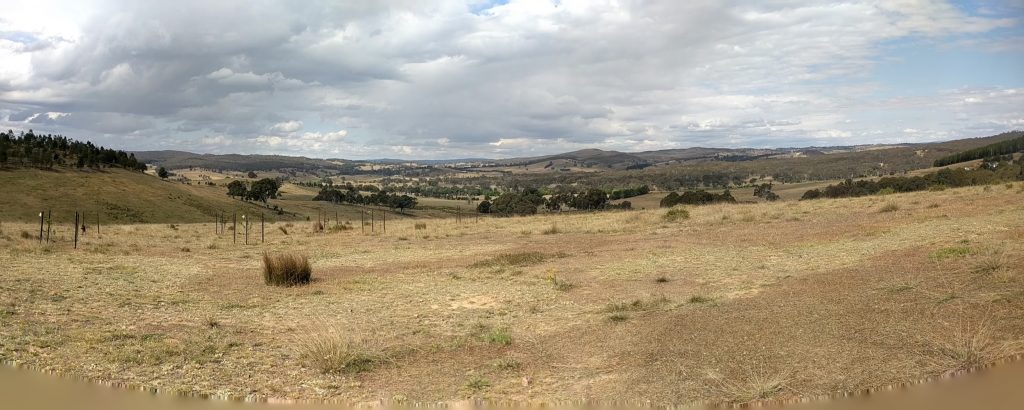
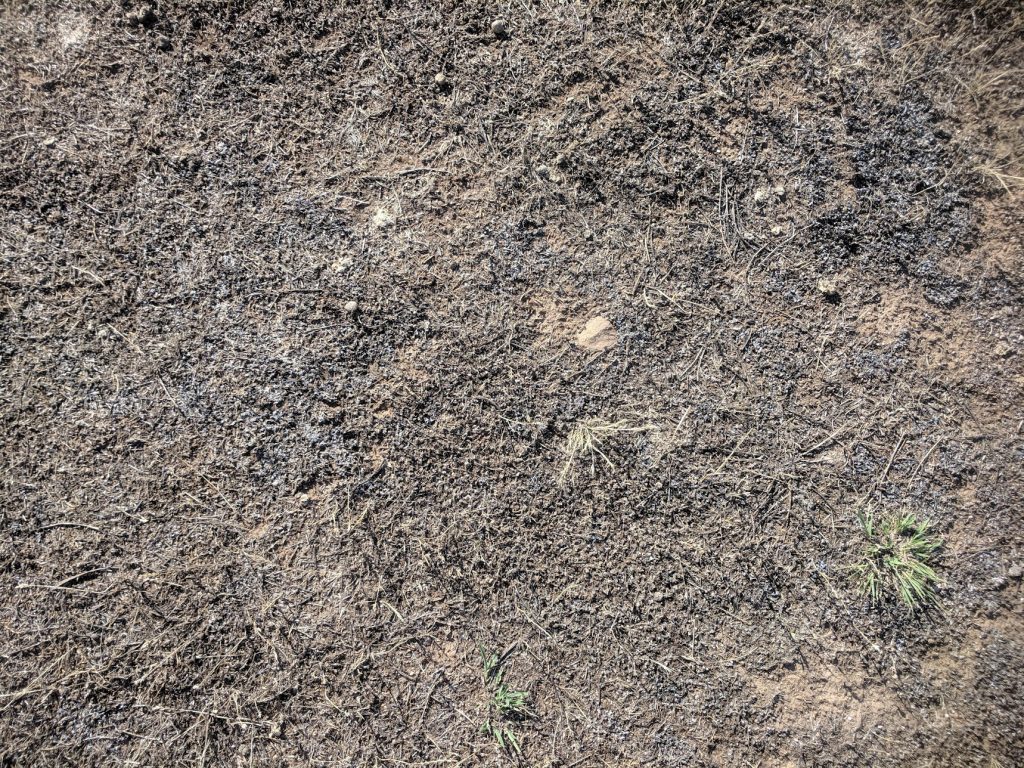
If you’ve viewed our Instagram posts, you would be familiar with the grasshopper plague that has decimated our orchards for the past few weeks. The grasshoppers themselves have devoured a large amount of the orchard leaves over the past few weeks, with the warm to hot weather and spring rainfall all playing a part in making the leaves of the trees more appetising than you’d normally expect. Our upper paddock around the orchard had turned brown quite quickly during periods of warm weather, with a week or two hovering around 30 degrees Celsius, which lead to a large amount of the ground cover grasses dying off. The soil up the top of the hill seems to have been sparse for quite a long time. We know that there is a mob of around 100 kangaroos that frequents our property and with the location of the hill both bordering natural bush land, and the property itself being a good distance from the main traffic ways, the kangaroos have had their way with it without any disturbance. Enter the grasshoppers who seem to have spawned in large numbers this year, likely due to good spring rainfall, and with little else to eat our orchard must have looked delicious!
After spending quite a bit of time deliberating about what to do with these grasshoppers, thinking about either blocking their access to plants or utilising some sort of insecticide, I decided to spray all the trees with eco-neem. What I like about the eco-neem product is that it’s registered organic and only controls a range of chewing and sucking insects. As new apiarists ourselves, with one hive already on the property, we wanted something that would target the pest grasshoppers whilst maintaining a safe environment for our bee friends, as well as be safe for pets, birds, lizards and other beneficial insects. The eco-neem is actually an extract from the Neem tree, Azadirachta indica, and works by suppressing the insects appetite and restricting their growth. After spraying all trees 1 week ago, I am somewhat happy to report that the orchard trees don’t look worse than they did a week ago, but sadly I’m not sure that all will make it.
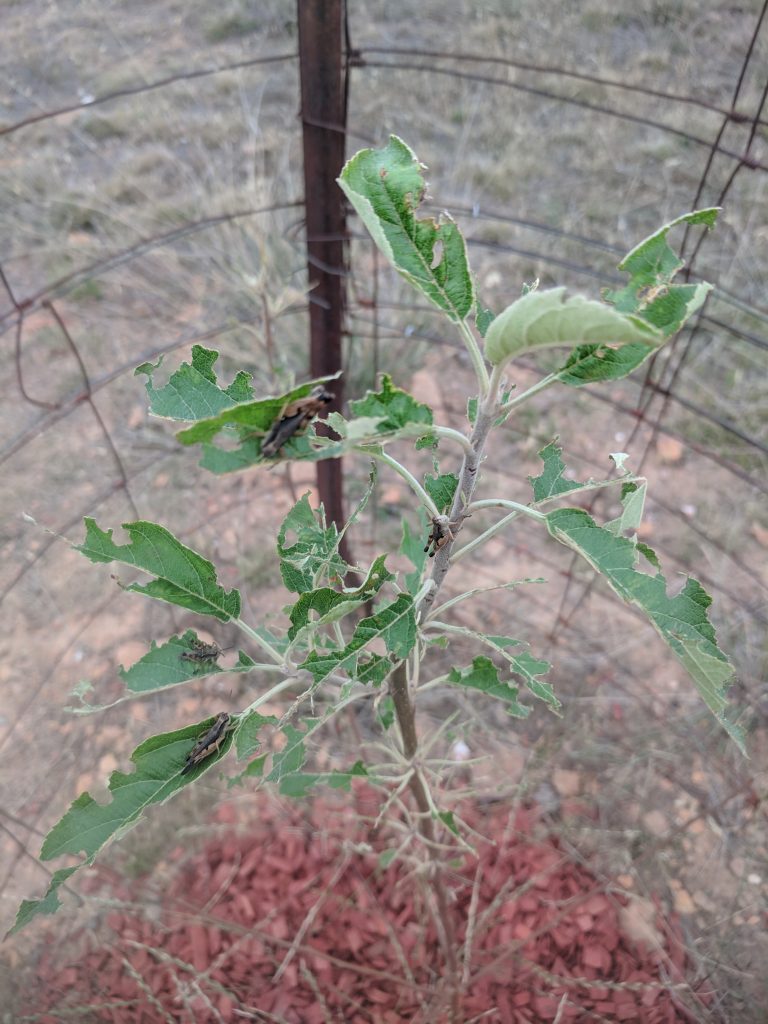
But, every cloud has a silver lining, so whilst a few trees may struggle to get back on track, some lessons learnt:
- Anticipate grasshopper action from early to mid November.
- At the first sign of grasshopper damage, spray all trees with eco-neem.
- Anticipate that grasshoppers will also love eating vegetable garden crops. Utilise row-cover on all beds that may be effected.
- Plant hedge rows, or encourage long grasses to grow, around the orchard and vegetable gardens. From my research this week I’ve read that there is some thought that providing the grasshoppers with an alternate meal can deter a number of them from attacking plants that you would like to protect.
- Once we are living on the property, run our chickens or other grasshopper eating birds through the orchard during the months of grasshopper activity. Free food for the chickens and free eggs for us! Yum!
So, a matter of “live and learn” I guess. Hopefully these actions will allow us to not only control the problem in the years to come, but perhaps we can benefit from it also!
Best wishes,
James